Is bioethanol getting a second look? 131 views

The bioethanol sector has been an important biofuel for the past decades, though it is maxing out on its addressable market. Alcohol-to-Jet (ATJ) is unlocking a new application for ethanol, creating significant opportunities in this industry. LanzaJet is one of the leaders providing ATJ technology focusing on the production of sustainable aviation fuel (SAF) from ethanol and other non-food feedstocks.
Bioethanol production largely continues to be populated with first-generation ethanol (e.g., corn and sugarcane feedstocks) producers. Concerns about competition with food resources and doubts about the environmental sustainability of first-generation processes, as a well as a search for a sustainable cost advantage over first-generation production methods, continue to motivate the development of advanced ethanol technology.
Despite the second-generation ethanol technology (based on lignocellulosic biomass or non-food biomass such as agricultural residues) having been developed for several years, success has been difficult to achieve, with many developers exiting the sector, leaving only the most promising technologies still operating. These remaining second-generation technologies have embraced a broadly diversified set of strategies to continue the process of commercialization.
“Third-generation” algae technology has been studied and developed for the production of ethanol through, but the studies remain to be demonstrated at commercial scale due to high capital costs and separation costs for the algal oil and co-products.
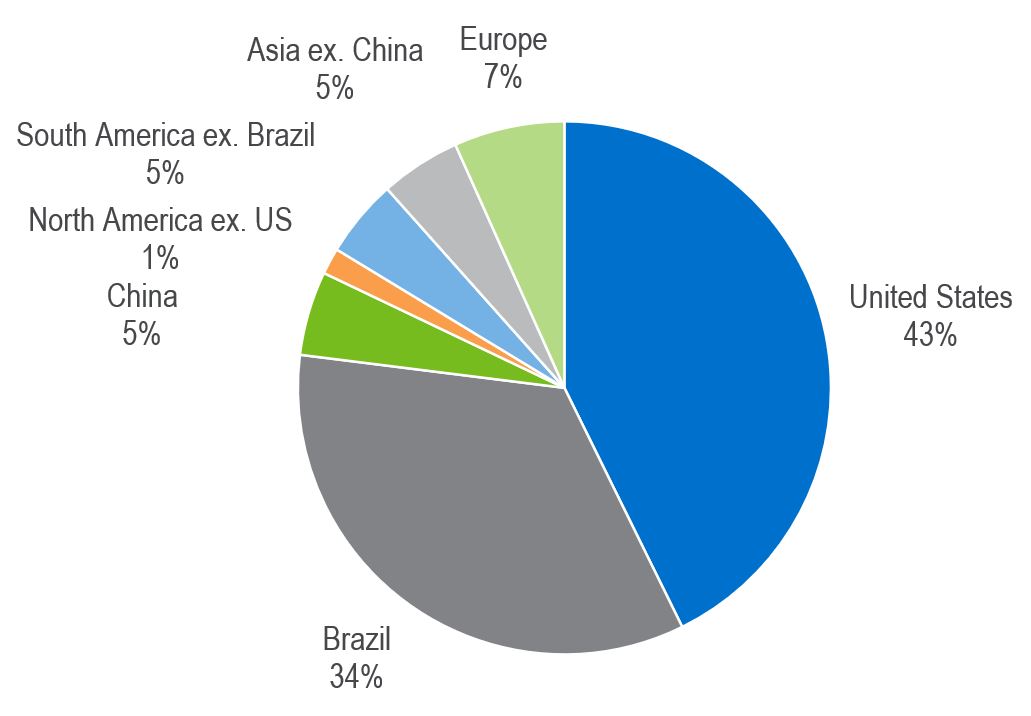
Global ethanol capacity is still concentrated in the United States and Brazil, with a combined capacity of around 84 percent. Therefore, first-generation ethanol produced from corn and sugarcane continues to dominate global ethanol production. In the recent development, Braskem, a prominent biopolymer producer using ethanol based route in Brazil, has partnered with a SCG Chemicals, a petrochemical in Thailand, to establish Braskem Siam Company Limited in Thailand. The joint venture aims to produce bioethylene with a capacity of 200 000 tons per year through agricultural based ethanol dehydration. Bioethylene will be used in the production of bio-based polyethylene.
Global Ethanol Capacity by Regions
A reduction in GHG emissions has been one of the major drivers for the development of the ethanol market. Based on an LCA study by Renewable Fuels Association, total emissions for ethanol from corn production to the consumption of ethanol as fuel in the automobile can total to around 53 g/MJ, almost 50 percent lower than the conventional gasoline. However, the growth for any biofuel is subject to the presence of regulatory mechanisms that serve to offset the cost of disadvantage of biofuels against the petroleum-derived products. Effectively, all the biofuels, even at the mass scale using widely available feedstock and well-developed technology such as the first-generation ethanol, are significantly more expensive than their petroleum-based equivalents.
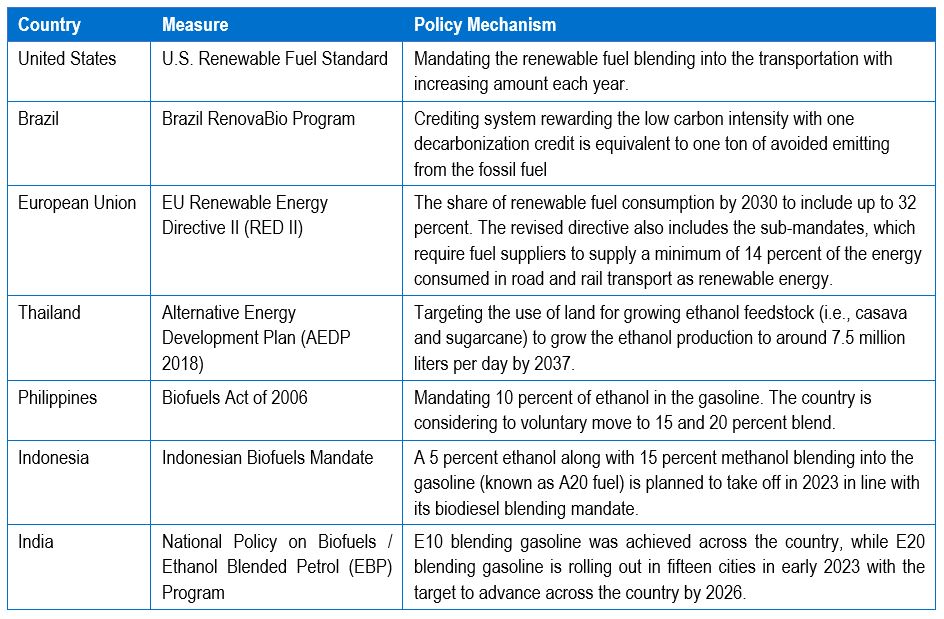
Various government policies have been increasingly discussed on ethanol as a strategic for transportation decarbonization. A summary of the biofuels policy by major nationals that play the key role in the bioethanol market are highlighted in the table below.
A Summary of Biofuels Policy